
Table of Contents
Essential Fire Protection in Denver, Colorado
In the bustling urban landscape of Denver, Colorado, businesses face heightened fire risks from dense layouts and the state’s dry climate, particularly in high-rise warehouses and retail spaces. Commercial fire protection in Denver, Colorado, is essential to safeguard lives and assets against these threats, ensuring swift response and minimal disruption.
At Pre Action Fire, we deliver comprehensive Fire Protection Company Denver Co services with NICET certified technicians providing 24/7 year-round protection. Our expertise includes custom installations of fire sprinklers, alarms, and commercial fire suppression systems in Denver, all compliant with the 2025 Denver Fire Code based on international standards. We recently completed a state-of-the-art system for a downtown warehouse, incorporating backflow inspection and fire pump testing to meet permitting requirements from the Denver Fire Department.
This guide explores costs, detailed services like NFPA compliance inspections in Denver, inspection frequencies, and regulatory essentials for business fire safety solutions in Denver. From tenant improvements to institutional facilities, discover tailored commercial flame prevention in Colorado while navigating regional variations along the Front Range.
Fire Protection Needs in the Denver Metro Area
Commercial fire protection Denver CO, demands a nuanced approach due to the region’s unique blend of urban density, industrial sprawl, and arid climate. At Pre Action Fire, we recognize how Colorado’s dry air intensifies fire risks in commercial settings, from warehouse blazes fueled by low humidity to electrical hazards in bustling retail environments. These factors underscore the need for robust Denver-area fire safety measures, ensuring properties maintain year-round protection and peace of mind.
The Denver Metro and Front Range present varied challenges across sub-areas, influenced by building types and local geography. Downtown’s towering structures face intense occupancy pressures, while Aurora’s industrial zones grapple with flammable storage. Suburban office parks along the Front Range contend with HVAC-related ignitions and broader evacuation logistics. Integrating these specifics with the 2025 Denver Fire Code, adopted from international standards, requires tailored strategies like our Nicet certified technicians’ custom installations.
Regional variations in risks highlight the importance of localized compliance. For instance, the Denver Building Codes guide emphasizes sprinkler mandates for high-rises, drawing from ICC amendments effective since December 2025. This table compares key differences to aid property owners in assessing needs:
Area Primary Building Types Common Fire Risks NFPA Compliance Focus
| Downtown Denver | High-rises, retail spaces | Dense occupancy, electrical overloads | Sprinkler systems, alarm integration |
| Aurora Industrial Zones | Warehouses, manufacturing | Flammable materials, large spaces | Suppression systems, pump inspections |
| Front Range Suburban | Office parks, institutions | HVAC fires, evacuation challenges | Backflow testing, extinguisher maintenance |
Data sourced from Denver Fire Department reports on area-specific incidents. These distinctions influence service selections, with Pre Action Fire adapting our offerings–such as commercial fire suppression systems in Denver for Aurora warehouses–to meet NFPA standards. We conduct NFPA compliance inspections in Denver annually for alarms and quarterly for high-risk suppressors, verifying technician credentials via Colorado’s DORA license check for reliable service.
Understanding these area-specific demands empowers facility managers to prioritize proactive solutions. Our Fire Protection Services Denver Co span the entire Metro, delivering custom-tailored safety solutions that align with local codes and reduce regional commercial flame control vulnerabilities.
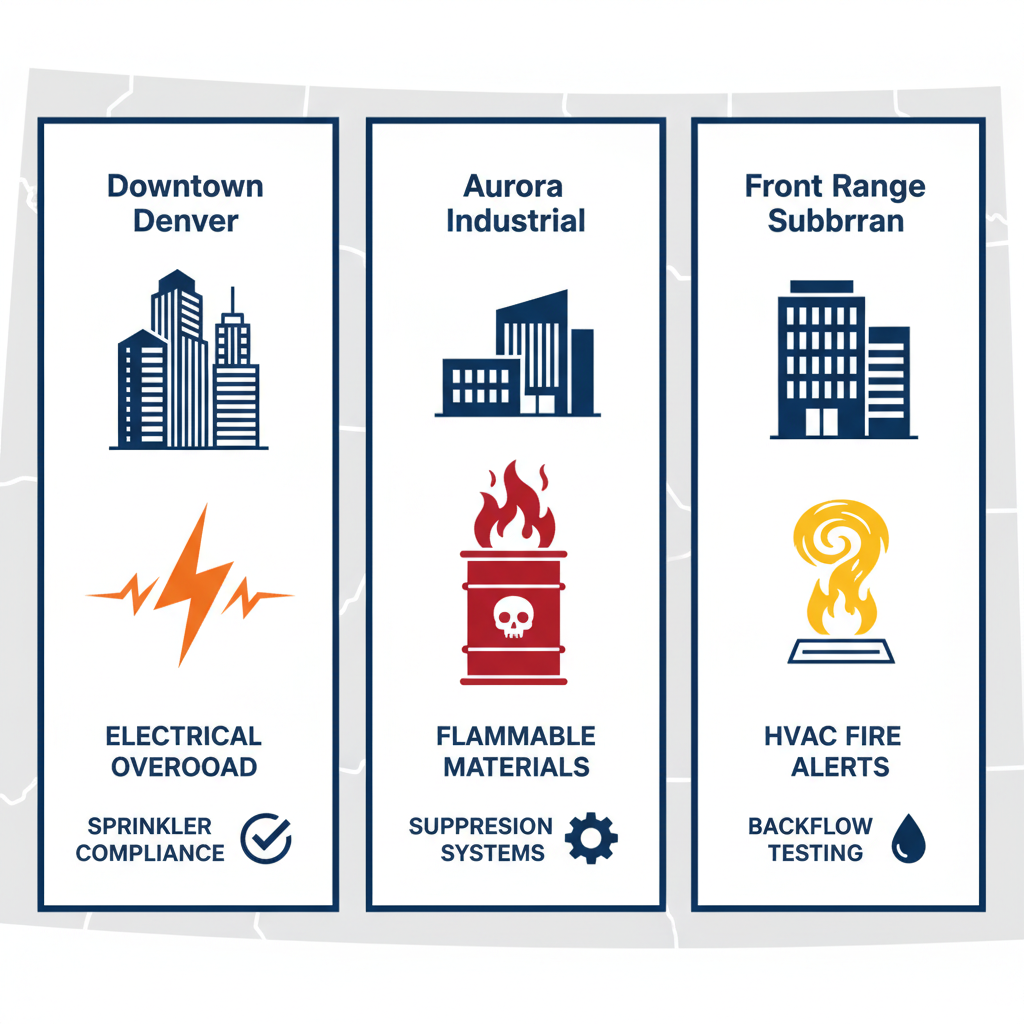
Fire protection needs visualization for Denver Metro regions
By addressing these tailored requirements, businesses across the Front Range can transition seamlessly to comprehensive protections that safeguard operations and comply with evolving regulations.
Available Fire Protection Services in Denver
In the bustling commercial landscape of Denver, Colorado, businesses require robust commercial fire protection in Denver, Colorado, to safeguard operations and personnel. At Pre Action Fire, we deliver unyielding fire protection services tailored for you, encompassing a full spectrum of installations, maintenance, and certifications. Our fire protection services Denver ensure compliance with the Denver Fire Code, which mandates permits for system installations and modifications through the city’s Fire Prevention Division.
We specialize in custom fire alarm and sprinkler installations designed for specific commercial needs, such as integrating detection sensors and automated suppression in high-risk areas. For ongoing safety, our NFPA compliance inspections in Denver cover fire extinguishers, pumps, and backflow preventers, adhering to annual testing frequencies outlined by local regulations. These inspections verify system integrity and help avoid costly downtime. Additionally, we handle commercial fire suppression systems in Denver for warehouses and retail spaces, using clean agent or wet chemical solutions to protect sensitive equipment without water damage.
Understanding Denver business fire safeguards involves tying services to local permitting requirements, where operational permits remain valid until revoked, ensuring year-round protection. Costs for basic inspections start at around $150, varying by property size and complexity, while full installations range from $5,000 to $20,000 depending on scope–always consult for precise estimates to maintain peace of mind.
As NICET-certified technicians, we provide 24/7 emergency response and monitoring, including rapid on-site repairs for facilities like a downtown Denver retail space facing urgent extinguisher recharge needs. Our comprehensive approach delivers custom-tailored safety solutions that meet municipal and insurance standards, fostering reliable local suppression installations.
Local Fire Protection Considerations in Denver
Navigating commercial fire protection in Denver, Colorado, requires a deep understanding of local regulations to ensure safety and compliance. Denver has adopted the NFPA 25 standard, which mandates rigorous inspections, testing, and maintenance for water-based fire protection systems. This framework helps commercial properties maintain system integrity during emergencies, promoting peace of mind for facility managers.
We ensure full compliance through our NICET-certified technicians, who handle commercial fire protection Denver with precision. For instance, fire alarms require annual inspections, while extinguishers need quarterly checks as per municipal codes aligned with NFPA guidelines. Non-compliance can result in substantial fines, potentially up to $2,000 per violation, and operational shutdowns under Denver’s fire code enforcement. Addressing commercial fire suppression systems in Denver is crucial, especially for high-risk areas like warehouses, where suppression regulations demand proactive measures to prevent costly disruptions.
Preparation begins with these key steps:
- Schedule NFPA compliance inspections in Denver annually for sprinklers and alarms to verify functionality.
- Conduct system testing quarterly, focusing on valves and pumps as outlined in NFPA 25.
- Document all maintenance to demonstrate local NFPA adherence and avoid penalties.
By following Denver code-compliant fire measures, businesses achieve year-round protection and seamless operations.
Getting Started with Fire Protection in Denver
Starting commercial fire protection in Denver, Colorado, requires a structured approach to safeguard your business against potential hazards. At Pre Action Fire, we guide you through the essential steps to assess risks, secure quotes, and implement reliable systems for alarms, sprinklers, and suppression, ensuring peace of mind with year-round protection.
To begin, follow these numbered steps tailored for Denver properties:
- Assess Your Property Risks: Conduct an initial evaluation to identify fire hazards specific to your facility. Schedule NFPA compliance inspections in Denver to review building codes and prepare for municipal requirements, focusing on areas like electrical systems and occupancy loads.
- Request Quotes: Contact providers for detailed estimates. Installation costs typically range from $5,000 to $15,000 depending on system size, covering commercial fire suppression systems Denver for kitchens or server rooms.
- Schedule Consultations: Arrange site visits with NICET certified technicians. We perform thorough walkthroughs to recommend custom-tailored safety solutions, integrating 24/7 emergency response.
- Select a Provider: Verify credentials using the Colorado Department of Regulatory Agencies (DORA) license check tool. Choose experts offering comprehensive services like fire alarm monitoring and backflow inspections.
- Implement Systems: Begin setup within 2-4 weeks, ensuring seamless integration for ongoing compliance.
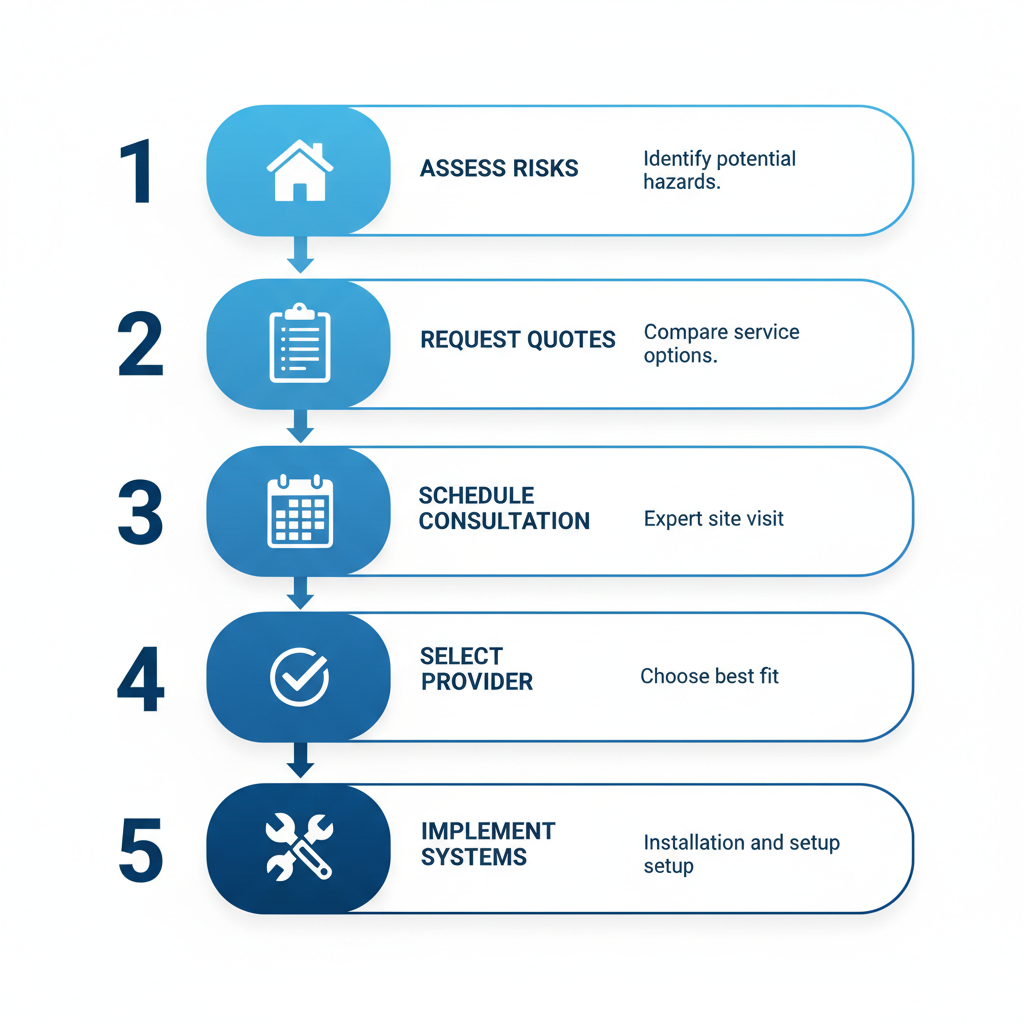
Step-by-step guide to initiating fire protection services in Denver
Use this checklist to track progress: [ ] Risk assessment completed, [ ] Quotes obtained, [ ] Consultation scheduled, [ ] Provider selected, [ ] Systems installed. This process empowers Denver businesses with proactive fire safety, bridging the gap from assessment to reliable protection.
Securing Your Denver Business Fire Safety
Securing commercial fire protection in Denver, Colorado, demands proactive compliance with local building codes and NFPA standards. We recap essential services like commercial fire suppression systems in Denver and NFPA compliance inspections in Denver, ensuring sustained compliance measures for ongoing Denver fire security.
Partnering with NICET certified technicians at Pre Action Fire delivers 24/7 year-round protection and custom-tailored safety solutions. Schedule fire safety inspections Denver today for peace of mind and business continuity–prioritize safety now to safeguard your operations.


